Kinderopvang en taalontwikkeling: zo leren kinderen spelenderwijs praten
De eerste woordjes van een kind zijn voor veel ouders een bijzonder moment. Maar voordat een kind daadwerkelijk begint te…
A child’s language development starts long before they say their first word. Babies listen to voices, recognise familiar sounds and learn to communicate through eye contact, facial expressions and sounds. As they grow, these first forms of communication gradually develop into words, sentences and conversations.
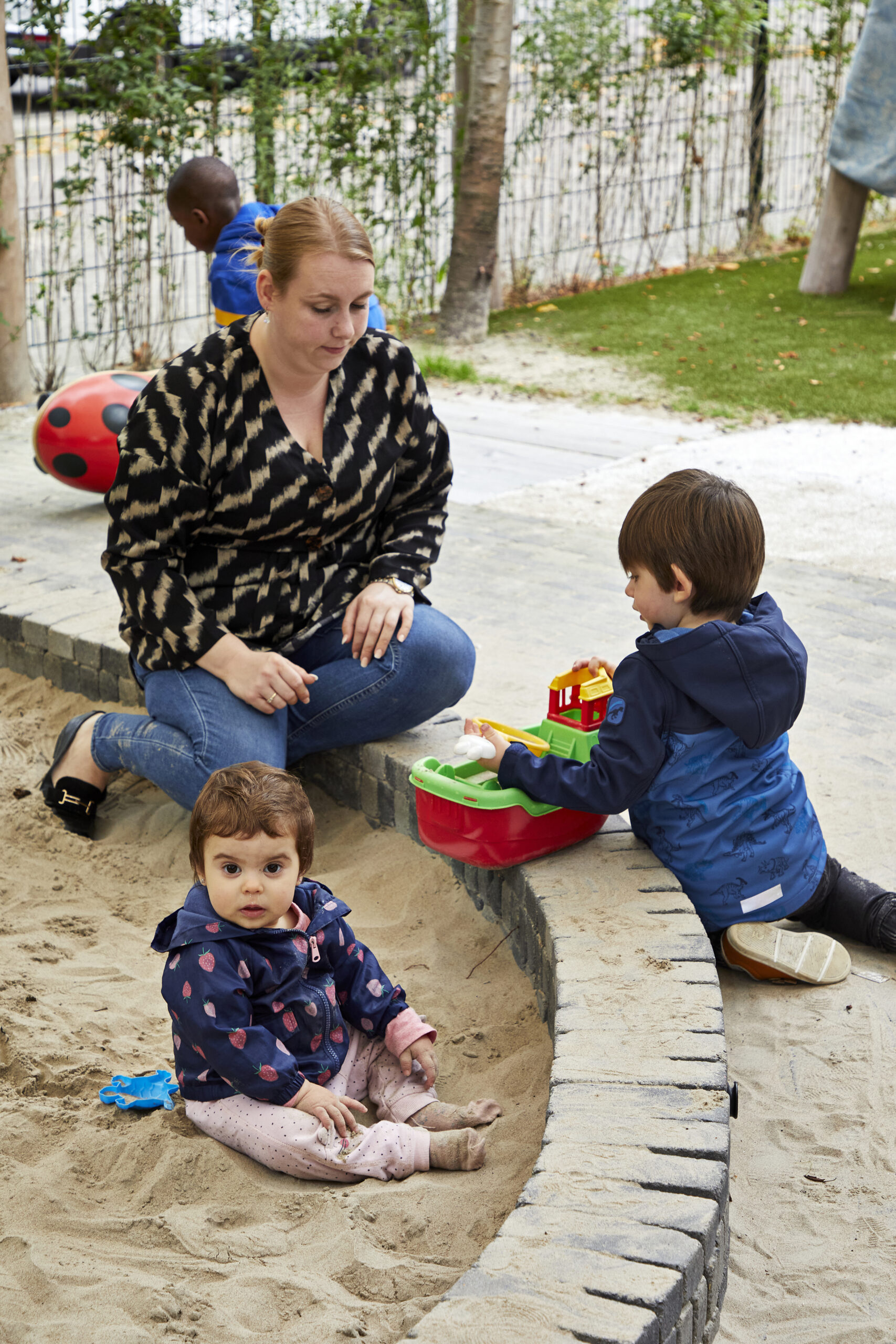
The environment in which children spend their time plays an important role in this process. At daycare, children are surrounded by language throughout the day. They listen to their caregivers, interact with other children, sing songs, hear stories and discover new words while playing. This means that language development happens naturally as part of everyday activities.
Even though babies cannot talk yet, they are already learning a great deal about communication. They listen carefully to voices and sounds and gradually begin to recognise patterns in language.
Talking to babies during everyday moments is therefore valuable. While changing a diaper, getting dressed or preparing a bottle, a caregiver can describe what is happening. Babies repeatedly hear words connected to the things they see, feel and experience.
Responding to a baby’s sounds and expressions is important as well. When a baby makes a sound and an adult responds, the baby begins to experience the basic principle of communication: one person expresses something and another responds.
For this interaction to develop naturally, children need to feel comfortable in their surroundings. Our article about why choosing a daycare with a stable team benefits your child explains why familiar caregivers and a stable environment are so important for young children.
Supporting language development does not require formal lessons. For young children, some of the best learning opportunities occur naturally throughout the day.
Mealtimes, for example, provide plenty of opportunities for conversation. Caregivers can name different foods, talk about colours and tastes or ask children what they would like to eat.
The same applies when getting dressed, tidying up or preparing to go outside. By talking about what is happening, children repeatedly hear words in a meaningful context.
This helps them connect language to real experiences. A word such as “ball” becomes much easier to understand when a child can see, touch and play with a ball at the same time.
As children grow older, these everyday conversations gradually become more interactive. Instead of simply listening, children start answering questions, sharing their own thoughts and initiating conversations themselves.
Play is one of the most natural ways for young children to learn. It also creates countless opportunities to practise communication.
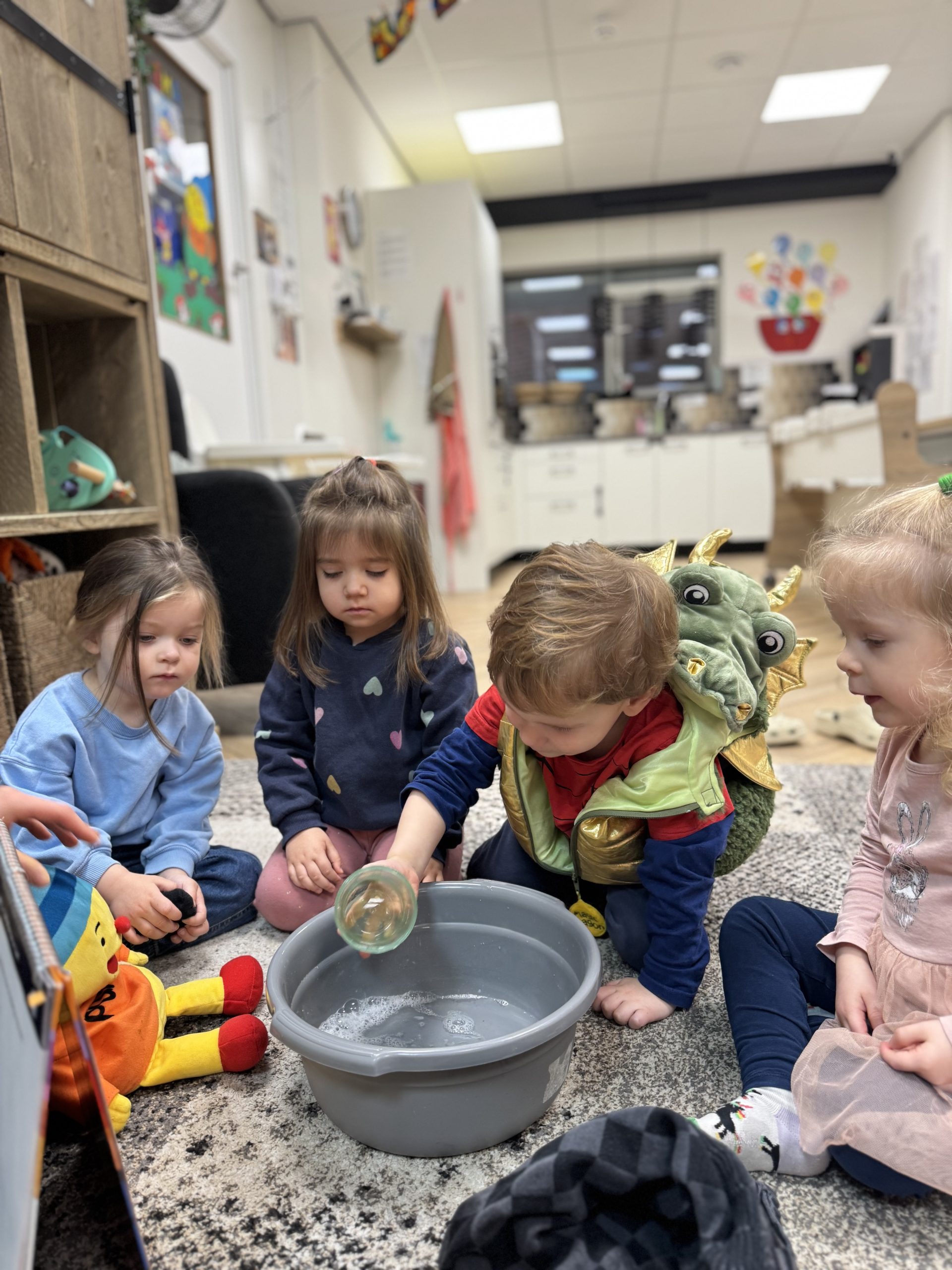
Imagine two children building a tower together. They may talk about which block to use, where it should go or what happens when the tower falls over. During imaginative play, communication becomes even more important.
A play kitchen might become a restaurant, for example. One child prepares the food while another places an order. Children assign roles, explain their ideas and respond to each other. Without consciously practising language, they are learning to use words and sentences in different situations.
For caregivers, these moments offer opportunities to introduce new words, ask open questions and encourage children to express themselves.
One of the benefits of daycare is that children spend time with other children. This creates a social environment in which communication happens throughout the day.
At Vipkids, children of different ages spend time together in vertical groups. Younger children hear how older children communicate and are introduced to words and sentences that may be new to them.
Older children also benefit from these interactions. They may explain something to a younger child, invite them to join a game or adapt the way they communicate when the younger child cannot yet express themselves in the same way.
These interactions happen naturally during play and everyday activities. They allow children to practise not only language but also listening, taking turns and understanding each other.
You can read more about the benefits of mixed-age groups in our article Why do children of different ages play together at daycare?.
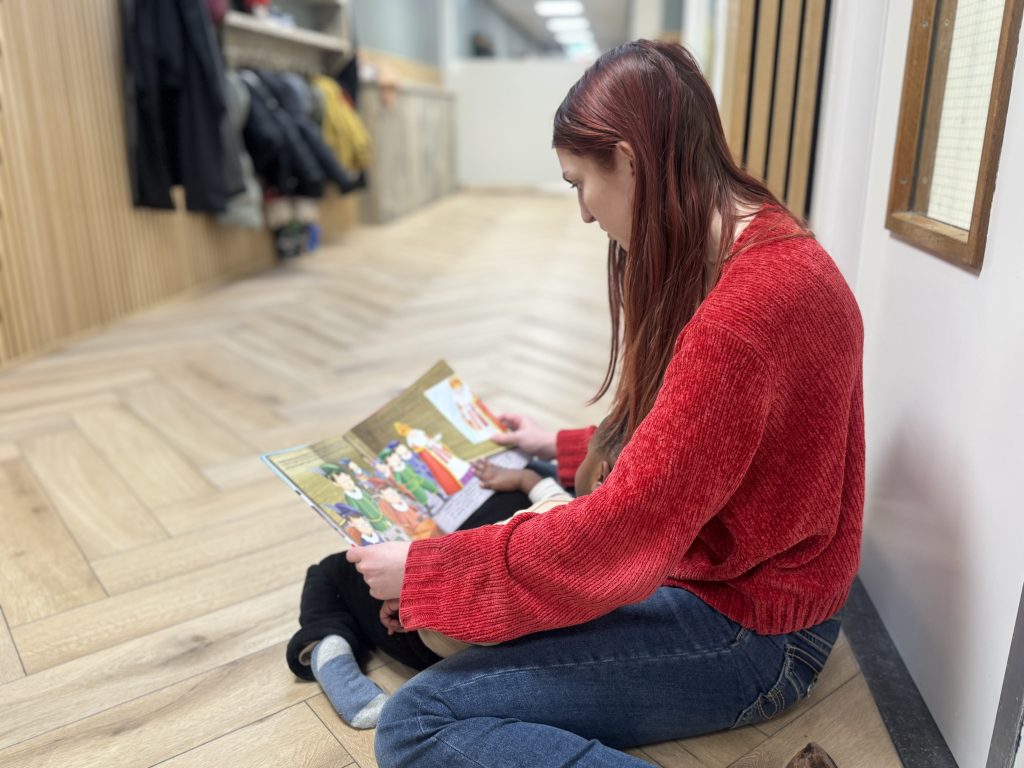
Reading is another valuable part of language development. Books introduce children to words, situations and ideas that may not always appear in their everyday surroundings.
Reading together can also be highly interactive. Instead of simply reading the words on the page, caregivers can talk about the pictures and ask questions about what is happening.
A younger child might point to an animal when asked where it is, while an older child might explain what they think will happen next. These small interactions encourage children to listen, understand and eventually use language themselves.
Repeating favourite books can be particularly valuable. Although adults may know the story by heart after reading it many times, repetition helps young children recognise words, anticipate sentences and understand the story more deeply.
Songs, rhymes and simple word games are another natural way to introduce children to language. Repeated sounds and words help children recognise patterns and become familiar with pronunciation.
Young children often remember parts of songs before they can form complete sentences themselves. They recognise what comes next and may gradually begin to join in with individual sounds or words.
Music also combines language with movement and enjoyment. Children are not sitting down to “learn” vocabulary. They are singing, moving and having fun while hearing the same language repeatedly.
Language development does not only happen indoors. Going outside gives children completely different experiences to talk about.
A bird in a tree, a puddle after the rain or leaves blowing across the playground can all become the starting point for a conversation. Children hear words connected directly to what they are seeing and doing.
Outdoor play also introduces concepts such as fast and slow, high and low, wet and dry, big and small. Because children experience these differences themselves, the words become more meaningful.
At Vipkids, outdoor play is an important part of the day. You can read more about its benefits in How outdoor play supports early childhood development.
Language development is not the same for every child. Some children start using words relatively early, while others spend more time listening before they begin talking. Differences between children are normal, and development does not follow exactly the same path for everyone.
That is why it is important to look at the individual child rather than constantly compare children with each other.
For babies, supporting language development may involve talking, making eye contact and responding to sounds. For toddlers, conversations, stories, songs and imaginative play can become increasingly important.
Caregivers can adapt their interactions to a child’s age, interests and stage of development. This allows language to develop naturally rather than turning communication into something children feel they have to practise.
Of course, language development continues after a child leaves daycare. Home and daycare can complement each other by giving children different opportunities to communicate.
Parents do not need special exercises or teaching materials to encourage language at home. Everyday activities are often enough. You can talk about what you are cooking, read a favourite book together, sing songs or ask your child about something they experienced during the day.
For children growing up with more than one language, these everyday interactions can be particularly rich. Hearing and using different languages can simply be part of their daily environment.
The most important thing is that children have plenty of opportunities to listen, communicate and be heard.
Daycare provides children with many natural opportunities to develop their language skills. Conversations with caregivers, interactions with other children, books, songs and play all contribute to an environment filled with language.
At Vipkids, these opportunities are part of everyday life. Children can play, explore and communicate at their own pace in a familiar environment where personal attention is important.
Are you looking for daycare in Amsterdam and would you like to learn more about our approach? Discover Vipkids daycare in Amsterdam or contact us to find out more about our locations and childcare.
Je ziet meteen hoe wij werken, hoe warm de sfeer is en hoe we elk kind persoonlijke aandacht geven. Wij beantwoorden graag al je vragen met een kop koffie erbij 