How daycare supports your child's language development
A child's language development starts long before they say their first word. Babies listen to voices, recognize familiar sounds and…
A child's first words are a special moment for many parents. But before a child actually starts talking, language development is already well underway. Babies listen to voices, recognize sounds, and react to facial expressions. Later, individual words, short sentences, and eventually entire stories are added.
The environment in which a child grows up plays an important role in this. Not only at home, but also at childcare, there are moments throughout the day when children are engaged with language. During play, eating, reading aloud, and outdoor play, they constantly hear and use new words. As a result, language development largely occurs through play.
A baby cannot talk yet, but is already engaged in communication from a young age. Babies listen to voices and sounds, make eye contact, and respond with sounds, movements, and facial expressions.
Interaction is created by talking to a baby, telling them what you are doing, and responding to sounds. For example, when an educational professional explains what is happening during dressing, a baby repeatedly hears words associated with specific actions and objects.
As a child gets older, they increasingly make connections between words and what happens around them. In this way, daily communication forms the basis for further language development.
Personal attention is important in this regard. A child must feel comfortable and safe to seek contact and express themselves. In our blog about emotional safety in childcare, we explain more about the importance of a trusted environment.
Language development does not have to take place during special language lessons or exercises. In fact, ordinary moments throughout the day offer ample opportunities to hear and use new words.
During meals, for example, children can talk about what is on the table. While getting dressed, items of clothing are named, and outside, completely different words come up. Think of trees, leaves, bicycles, birds, rain, or sand.
By naming what children see and do, words are linked to concrete experiences. A word like 'ball', for example, takes on much more meaning when a child plays with a ball at the same time.
Pedagogical professionals can respond to this throughout the day. By asking questions, naming things, and giving children time to respond themselves, language develops naturally.
Play is an important part of the development of young children and simultaneously offers many opportunities for language development.
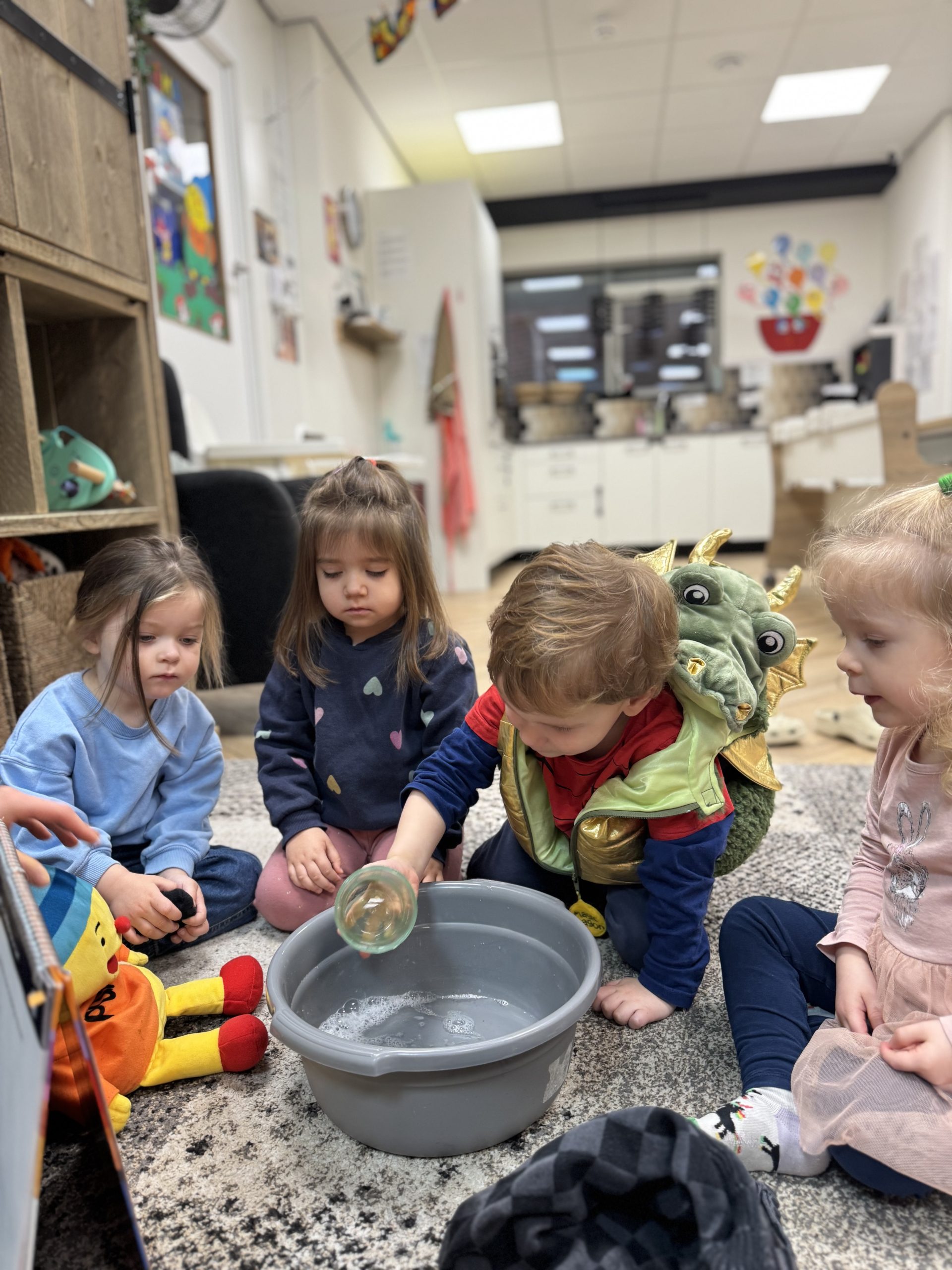
When children build a tower together, stand in a play kitchen, or play with cars, communication arises naturally. They make clear what they want, respond to each other, and use words that fit the game.
As children get older, this becomes increasingly elaborate. A simple game can turn into a complete story in which children take on different roles. For example, one is the doctor, while another plays the patient. During such role-playing, children unknowingly practice words, sentences, and conversations.
At that moment, language is not a separate activity, but part of the game. It is precisely because of this that children can practice in a relaxed way.
At childcare, children do not only hear adults talking. They are also constantly surrounded by other children. This offers many opportunities to learn from each other.
At Vipkids, we work with vertical groups where children of different ages are cared for together. This allows younger children to come into contact with the language of older children. They hear new words and longer sentences and see how other children make clear what they mean.
Conversely, older children learn to take into account children who cannot yet express themselves in the same way. They adapt their communication, explain things, or help a younger child during play.
In this way, a lot of interaction between different ages develops naturally within the group.
You can read more about this in our blog Why do children of different ages play together at childcare?
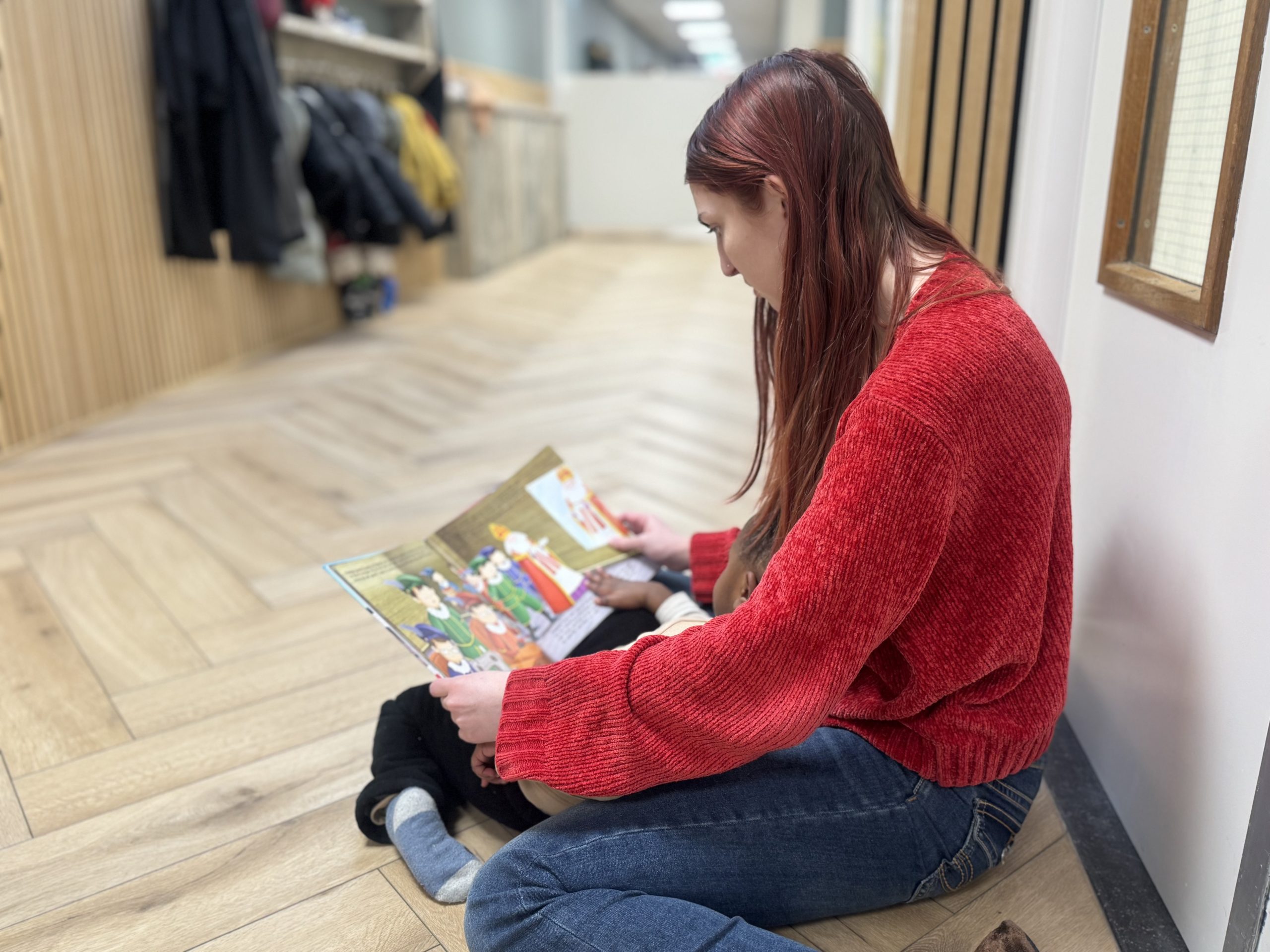
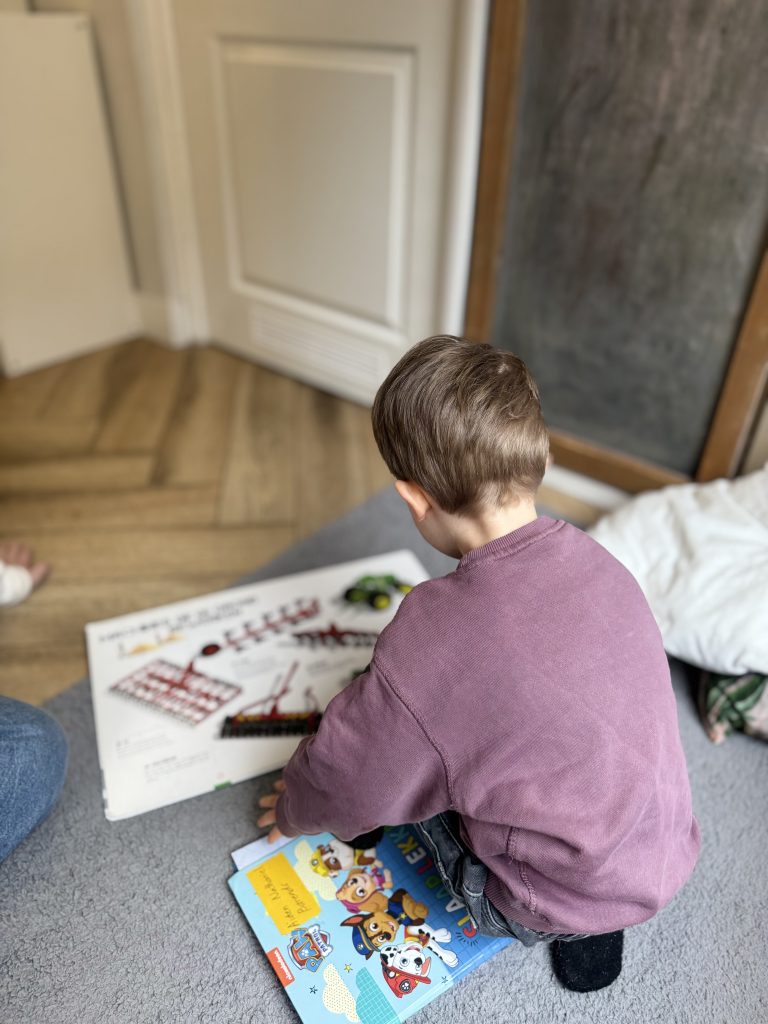
Reading aloud is a simple and valuable way to introduce children to language. Books feature words, situations, and topics that children might not encounter every day in their daily lives.
Moreover, reading aloud does not have to be a one-way street. By looking at pictures together, asking questions, and letting children tell you what they see, interaction is created.
For example, an educational professional might ask: “What do you see here?” or “What do you think is going to happen now?” A younger child might respond by pointing at something, while an older child can already tell a whole story.
In this way, not only does vocabulary grow, but children also practice listening, understanding, and formulating their own sentences.
Songs and rhymes also play a wonderful role in language development. Children hear sounds and words that are repeated regularly. It is precisely this repetition that helps them recognize language increasingly better.
Many young children can already complete parts of a familiar song before they can hold full conversations. They recognize the rhythm and know which word comes at a certain moment.
In addition, music makes language fun and accessible. Children do not have to consciously focus on learning new words. They sing along, move, and have fun, while simultaneously practicing language.
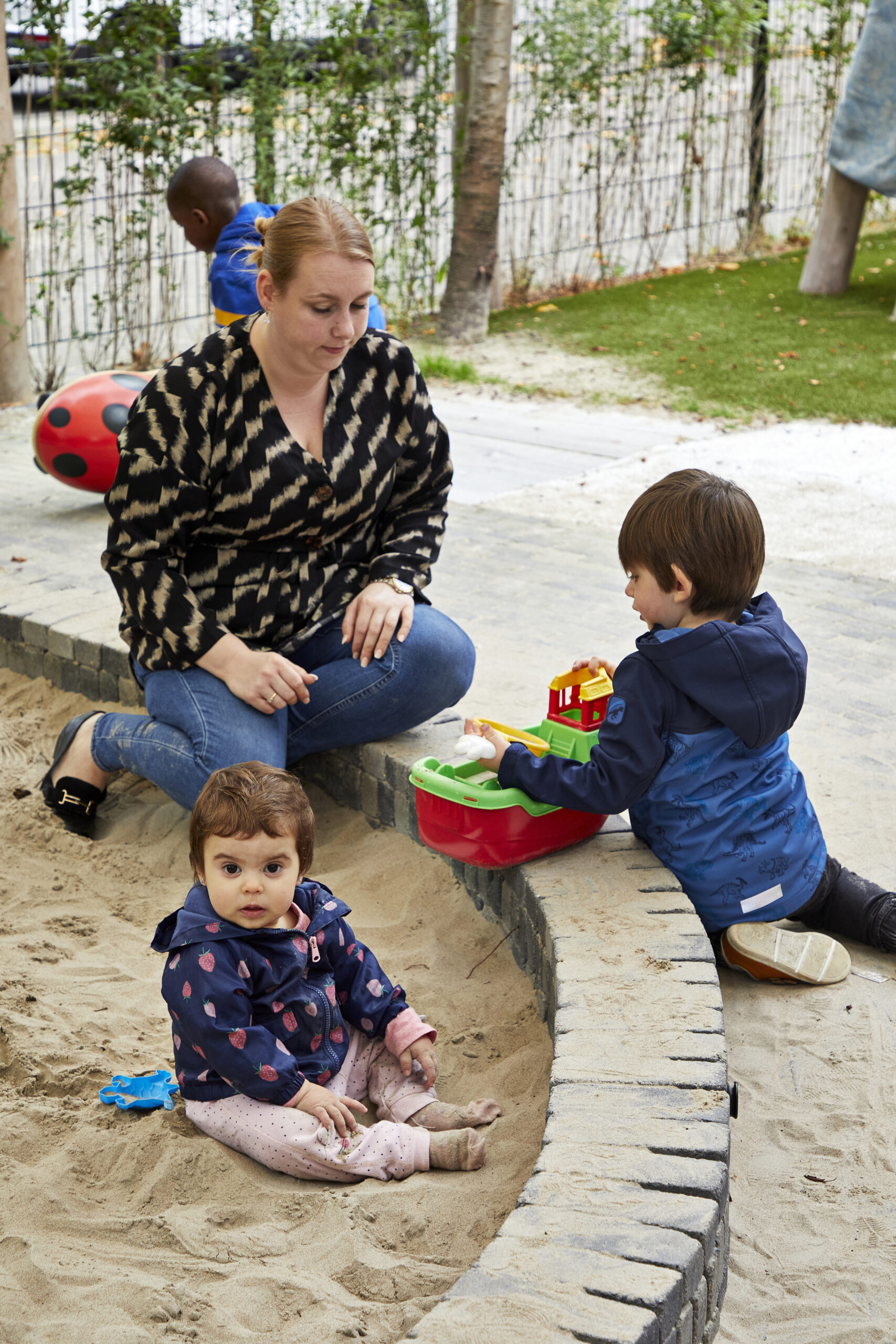
Language development naturally does not only take place indoors. While playing outdoors, too, children constantly encounter new things that provide an opportunity to talk.
An insect in the grass, a large puddle after a rain shower, or a passing truck: for children, almost anything can be a reason for a question or conversation.
Moreover, outdoors children move a lot and gain concrete experiences. Words such as high, low, fast, slow, wet, dry, heavy, and light take on meaning because children experience them themselves.
At Vipkids, we therefore consider outdoor play an important part of the day. In our blog "Outdoor play and healthy eating: the benefits of green childcare," you can read more about the value of being outdoors for young children.
Just like learning to walk, sleep, or eat independently, every child develops in their own way. One child says many words early on, while another listens longer and then suddenly makes great strides.
Therefore, it is important not to constantly compare children with one another. In childcare, pedagogical professionals look at the individual child and align as much as possible with the developmental stage the child is in.
For a baby, language stimulation primarily means talking a lot, responding, and making contact. For a toddler, on the other hand, little conversations, questions, stories, and imaginative play can become increasingly important.
A safe environment always forms the basis. When a child feels at ease, they are given the space to explore, make mistakes, and try new things. You can also read our blog " The importance of a safe pedagogical climate in childcare" about this.
Language development naturally does not stop when a child is picked up at the end of the day. Home and childcare actually complement each other.
You can also easily make language a part of the day at home. For example, talk about what you are doing while cooking, look at a book together, sing songs, or ask your child about something that happened that day.
It doesn't have to feel like you are consciously working on language development. On the contrary, by talking to each other a lot, listening, and doing things together, a child is constantly exposed to language.
Language development is not an isolated part of the day. It happens constantly. While playing, eating, singing, reading aloud, getting dressed, and playing outdoors, children are engaged in listening, understanding, and communicating.
At Vipkids, we want to give children the space to develop at their own pace. In a familiar environment, with personal attention and plenty of opportunities to play together and discover new things.
Are you looking for childcare and curious about what a day with us looks like? Then take a look at our childcare in Amsterdam or contact us to get to know Vipkids.
You will immediately see how we work, how warm the atmosphere is, and how we give every child personal attention. We are happy to answer all your questions over a cup of coffee. 