Childcare and language development: how children learn to talk through play
A child's first words are a special moment for many parents. But before a child actually starts to…
When looking for childcare, the question quickly arises: how many days of childcare per week is ideal for a child? Does a child need to attend daycare for several days to adjust properly, or does the number of days actually not matter that much?
There is no fixed number of childcare days that is ideal for every child. Every child and every family is different. Much more important than the exact number of days is establishing regularity, familiarity, and predictability . When a child attends childcare on fixed days and experiences a familiar structure there, they increasingly know what to expect.
When considering how many days of childcare are ideal, the first thing people often look at is the number of days. However, that doesn't tell the whole story. For young children, routine and predictability are particularly important.
When a child attends daycare on fixed days, a recognizable weekly routine develops. The location becomes familiar, faces become known, and the various moments throughout the day become increasingly recognizable. Think of drop-off, playing together, eating, sleeping, playing outside, and finally being picked up.
That predictability can provide a sense of calm. A child knows increasingly well what is going to happen and is given the opportunity to feel at home within the group at his or her own pace.
At Vipkids, we therefore work with a recognizable daily routine and recurring moments. For the youngest babies, their own rhythm is naturally the guiding principle. We align as much as possible with their sleep and feeding rhythms and with what they are used to from home.
As children get older, they increasingly grow into the rhythm of the group. In this way, we combine structure and familiarity with attention to the individual needs of each child.
You can read more about the importance of a trusted environment in our blog about emotional safety in childcare.
In addition to routine, your child's character also plays an important role. Some children quickly feel at ease in a new environment. Other children need more time to become familiar with new faces, spaces, and routines.
That is why we prefer to look at the individual child rather than a specific number of childcare days. A child must be given the time and space to adjust in his or her own way.
A good settling-in period can help with this. By calmly getting to know the childcare facility, the pedagogical professionals, and the other children, more trust develops step by step.
In our blog "Getting used to childcare: how to help your child get off to a good start," you can read more about how to support your child during this period.
Fixed childcare days are not the only source of familiarity. The structure during a childcare day also plays an important role.
Recurring moments such as eating together, playing, going outside, and resting provide children with a sense of stability. They become increasingly familiar with the rhythm of the day and, as a result, know roughly what to expect.
That does not mean that every day unfolds in exactly the same way. Naturally, there must remain sufficient room for spontaneous activities, individual needs, and whatever is happening within the group at that moment.
Moreover, for babies, their personal rhythm is central. A young baby who is tired does not have to wait until a fixed nap time begins. As children get older, they can increasingly align with the shared daily rhythm.
A child can only truly play freely and explore when they feel safe. Therefore, not only is routine important, but also the environment in which a child is cared for.
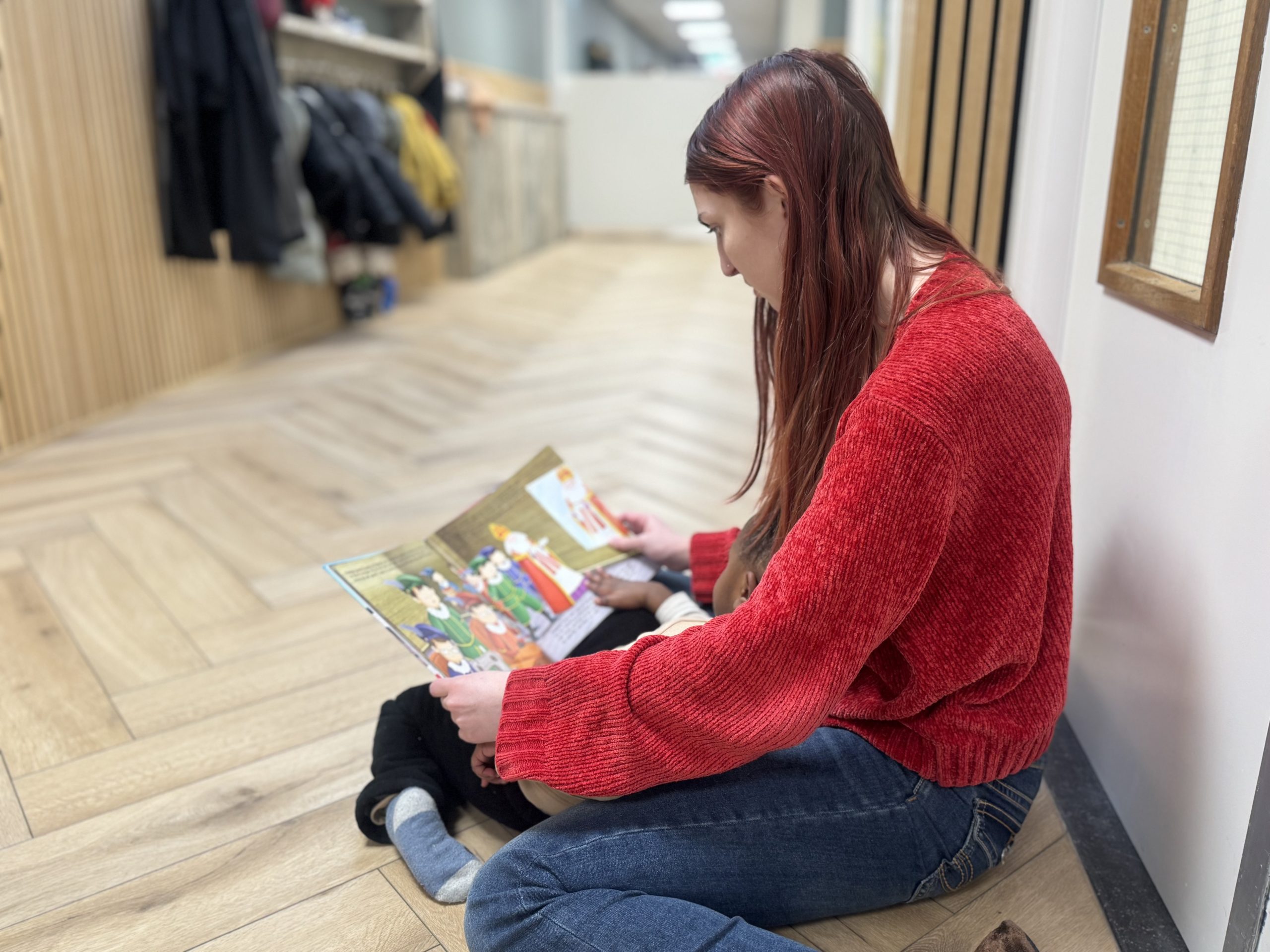
Trusted pedagogical professionals play an important role in this. When children regularly see the same faces, they have the opportunity to build a bond. At the same time, the pedagogical professional gets to know the child better and can therefore better respond to what the child needs.
When choosing childcare, it is therefore wise to look beyond just which days are available. What does the group look like? How are children treated? Is there personal attention? And does the pedagogical vision align with what is important to you?
You can read more about this in The importance of a safe pedagogical climate in childcare.
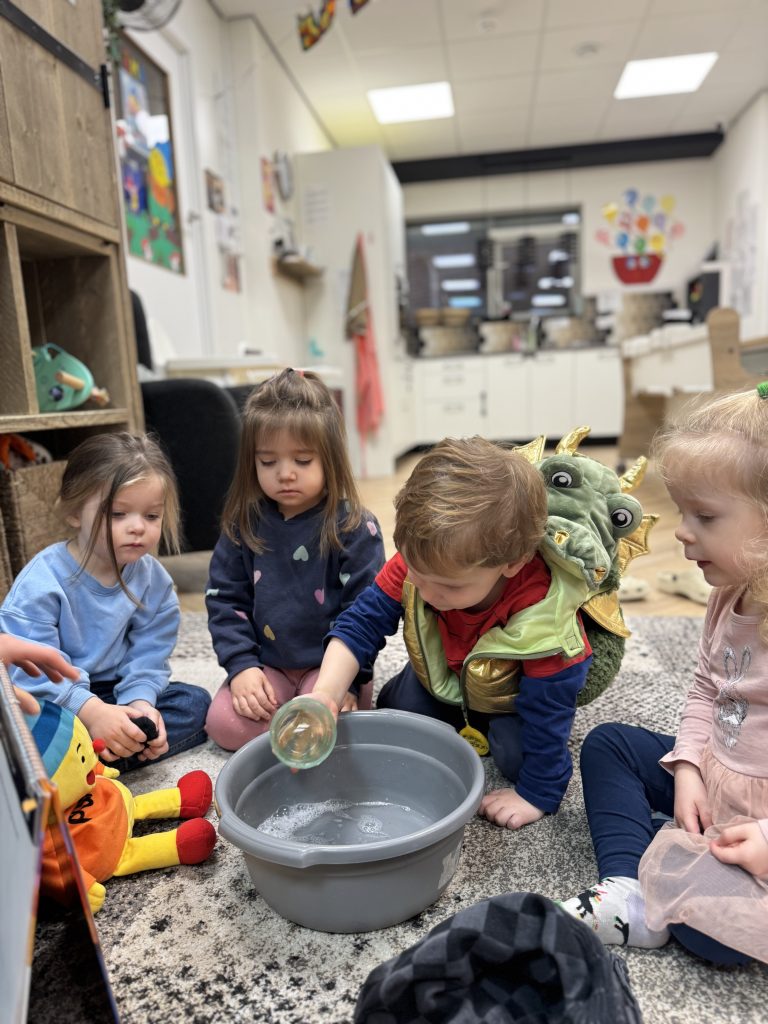
Childcare is of course a practical solution for working parents, but for children it is also a place where a lot happens every day. They meet other children, play together, and gain new experiences.
At Vipkids, we work with vertical groups, where children of different ages grow up together. Younger children can watch what older children are doing, while older children learn to be considerate of the youngest.
This naturally creates all kinds of social learning moments. Children learn to play together, share, communicate, and be considerate of one another.
You can read more about this way of working in Why do children of different ages play together in childcare?
Outdoor play is an integral part of this as well. Outside, children are given the space to move, explore, and gain new experiences together. Read more about this in our blog Outdoor play and healthy eating: the benefits of green childcare.
Therefore, you cannot express the ideal number of childcare days per week in a single figure. The right choice depends on your child, your family situation, and the way the childcare is organized.
Therefore, try not only to determine how many days your child attends daycare, but above all, look at the big picture. Can you create a fixed routine? Does your child feel comfortable at the daycare? Are there familiar faces? Is attention paid to your child's individual needs? And do you have a good feeling about the location yourself?
It is precisely that combination that is important.
Are you still looking for suitable childcare? In our blog "What to look for when choosing a daycare center in your neighborhood?", you will find various points to consider.
Ultimately, there is no general ideal number of childcare days per week. What works well for one child and family may not be the best solution for another.
Routine and a familiar environment are more important than just the number of childcare days. Fixed days, a recognizable daily routine, trusted pedagogical professionals, and personal attention help a child feel at home at childcare.
Are you curious how we handle this at Vipkids? Check out our childcare in Amsterdam or contact us to get to know Vipkids.
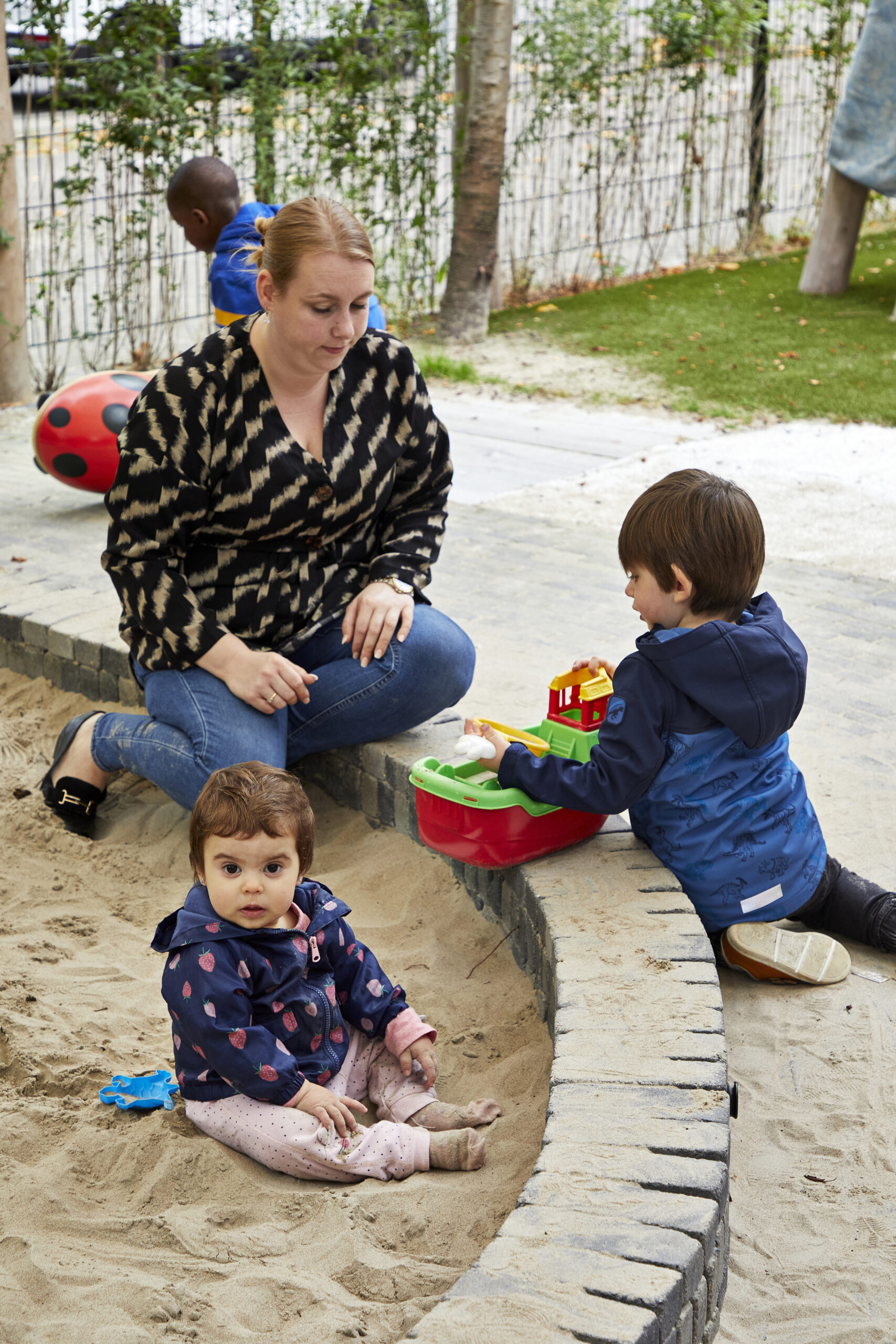
You will immediately see how we work, how warm the atmosphere is, and how we give every child personal attention. We are happy to answer all your questions over a cup of coffee. 